
Weeks 1–2
Pain
Calm the swelling down.
Hands-on techniques and guided movement calm post-surgical swelling and protect the graft while it heals, starting your very first visit.
What We Treat
The surgery is done. Now the real work starts: getting your knee strong enough to trust again, not just strong enough to walk on. It starts with a cause-first evaluation of exactly where you are, not a generic exercise sheet.
A real person calls you back, usually within two business hours.
Request sent.
That’s the hard part done. We’ll call during business hours to lock in your time. Most people are on the schedule same week.
Call us now insteadSound Familiar?
Two or more? Recovery has a plan, and it isn’t guesswork.
Why It Happens
Surgery repairs the ligament. It doesn’t rebuild the strength, control, and confidence you lost in the meantime. What actually stalls a recovery is usually some mix of three things: quad and hamstring strength that hasn’t caught up to your other leg, movement patterns your brain built to protect the knee that never got unwound, and a rehab program that stopped the moment pain went away instead of when strength actually came back.
None of that shows up on a follow-up X-ray. It takes a real, cause-first evaluation, real strength testing, real movement screening, to know exactly where your knee stands. That’s why a stack of generic exercise handouts so often leaves people undertrained: it treats the calendar, not the knee.
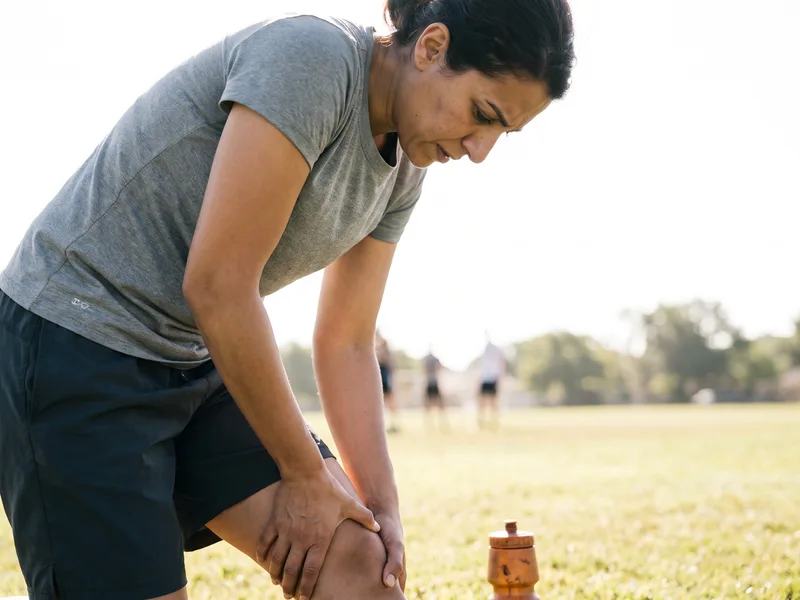
You’re the athlete who wants back on the field, not just off crutches. Which is exactly why a printout of leg lifts was never going to cut it.
The Honest Truth
Nobody regrets starting too early. Every week, someone in our clinic says they regret waiting.
How We Fix It
Every plan has an endpoint. Here’s what the four phases look like for ACL recovery.
Weeks 1–2
Pain
Hands-on techniques and guided movement calm post-surgical swelling and protect the graft while it heals, starting your very first visit.
Weeks 2–12
Prime
Targeted mobility and activation work restores full knee motion and wakes up the quad that shuts down after surgery.
Months 3–6
Perform
Progressive strength, balance, and control work closes the gap between your surgical leg and your other one.
Month 6+
Prevent
Cutting, pivoting, and sport-specific mechanics get tested under real load before you’re cleared to go all-in: that’s the endpoint, not just a date on a calendar.
We treat the cause behind ACL recovery, not just the symptom, with a plan built around what you actually need.
Our approach · ACL recovery
Before care: ACL recovery getting in the way of daily life
With a plan: steady progress, built around your actual goals
Questions, Answered
No, and waiting usually costs you ground. Most ACL protocols start PT within days of surgery, while you’re still on crutches, to protect the graft and keep your knee from stiffening up. We coordinate directly with your surgeon’s protocol, and Colorado allows direct access to physical therapy, so getting started doesn’t have to wait on paperwork either.
Yes, when it’s dosed correctly. An ACL graft actually needs progressive load to heal strong, being too gentle for too long is its own risk. You’re one-on-one with a physical therapist every visit, so the intensity is built around where your knee actually is, not a generic week-by-week sheet.
A full ACL recovery runs through all four phases, Pain, Prime, Perform, and Prevent, typically stretching from the first weeks after surgery out to around six months, sometimes longer for a full return to cutting and pivoting sports. Either way, you get a plan with an endpoint: real return-to-sport testing tells you when you’re actually ready, not just a date circled on a calendar.
Book Your Visit
Request a time and a real person calls you back, usually within two business hours. No phone tree. No ‘someone will reach out.’ Just a plan.
4.9 · 150+ Google reviews
Typical response: under 2 business hours
Step 1 of 5
That’s the hard part done. We’ll call during business hours to lock in your time. Most people are on the schedule same week.
Visit Us