
Weeks 1–2
Pain
Calm the pain down.
Hands-on techniques calm the irritated tendon or compressed nerve and take the edge off inflammation, starting your very first visit.
What We Treat
Your grip giving out halfway through opening a jar. The ache that shows up in your elbow after a day of gripping, typing, or lifting. It’s fixable, and it starts with a cause-first evaluation, not a guess.
A real person calls you back, usually within two business hours.
Request sent.
That’s the hard part done. We’ll call during business hours to lock in your time. Most people are on the schedule same week.
Call us now insteadSound Familiar?
Two or more? Keep reading.
Why It Happens
Your elbow or wrist doesn’t flare up for no reason. It’s usually some mix of a few things overlapping: tendons overloaded from repetitive gripping, typing, or lifting, the classic setup for tennis elbow or golfer’s elbow. A compressed nerve at the wrist or elbow sending numbness and tingling into your fingers. Stiff joints in your forearm that quietly force your tendons to do extra work. And forearm and hand muscles that got weak somewhere along the way, so every grip task overloads the same worn spot.
None of that gets sorted out by a wrist brace and hoping. It takes a real, cause-first evaluation to know exactly what’s driving it, especially when you’re the one who works with your hands all day and just switches tasks and calls that a break. Find the actual cause, and the fix stops being a guessing game.
The Honest Truth
Nobody regrets starting too early. Every week, someone in our clinic says they regret waiting.
How We Fix It
Every plan has an endpoint. Here’s what the four phases look like for an elbow or wrist.
Weeks 1–2
Pain
Hands-on techniques calm the irritated tendon or compressed nerve and take the edge off inflammation, starting your very first visit.
Weeks 2–6
Prime
Targeted mobility work restores wrist, forearm, and elbow motion in the joints that have been guarding the injury.
Weeks 6–10
Perform
Progressive grip and forearm strengthening builds the durability that was missing before the pain started.
Weeks 10+
Prevent
Gripping, typing, and lifting mechanics get tested under real load before you’re cleared to go all-in: that’s the endpoint, not just another appointment.
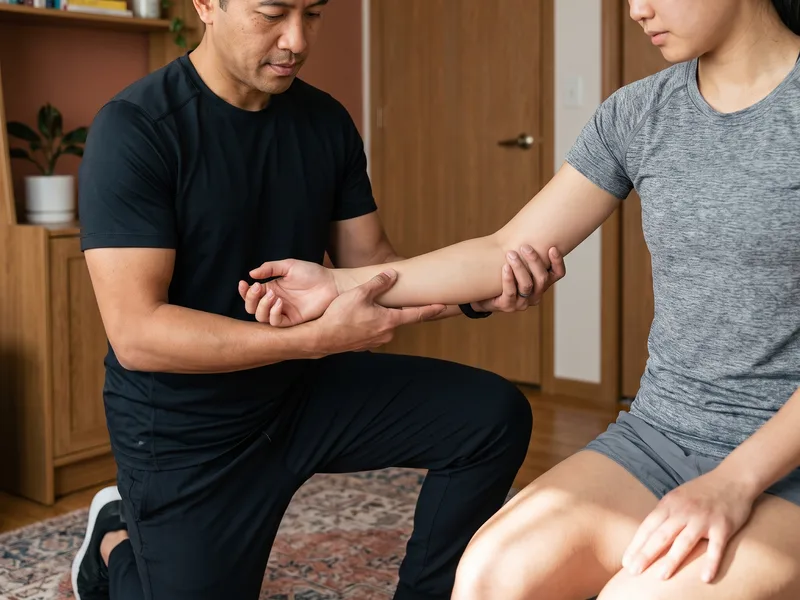
We treat the cause behind elbow & wrist pain, not just the symptom, with a plan built around what you actually need.
Our approach · Elbow & wrist pain
Before care: elbow & wrist pain getting in the way of daily life
With a plan: steady progress, built around your actual goals
Questions, Answered
Usually not, and it’s rarely the right first step. Tendon issues like tennis elbow and nerve issues like carpal tunnel are diagnosed by how your elbow and wrist move and respond, not by a scan. We start with a hands-on, cause-first evaluation to find the real source, and if imaging ever becomes genuinely necessary, we’ll help you get it. You don’t have to wait on a scan to start feeling better.
In most cases, yes, with the right modifications while it heals. Completely avoiding your hands isn’t realistic, and total rest lets the grip and forearm strength you need get weaker. A physical therapist sorts out which tasks to ease off, which ones are fine, and how to load your grip back up safely as you improve.
Most patients feel meaningful change within 4–6 visits. A full plan for elbow & wrist pain runs through all four phases, Pain, Prime, Perform, and Prevent, typically over 8–10 weeks, depending on how long you’ve been dealing with it. Either way, you get a plan with an endpoint: you’ll always know which phase you’re in and what’s left, not an open-ended string of appointments.
Book Your Visit
Request a time and a real person calls you back, usually within two business hours. No phone tree. No ‘someone will reach out.’ Just a plan.
4.9 · 150+ Google reviews
Typical response: under 2 business hours
Step 1 of 5
That’s the hard part done. We’ll call during business hours to lock in your time. Most people are on the schedule same week.
Visit Us