
Weeks 1–2
Pain
Manage swelling, protect the joint.
Gentle hands-on care and guided movement control swelling and pain while respecting your surgeon’s precautions, starting your very first visit.
What We Treat
The surgery is done. Now the real work of getting your independence back begins. It starts with a cause-first evaluation of exactly where you are today, not a generic protocol.
A real person calls you back, usually within two business hours.
Request sent.
That’s the hard part done. We’ll call during business hours to lock in your time. Most people are on the schedule same week.
Call us now insteadSound Familiar?
Two or more? Keep reading.
Why It Takes Real Work
A hip replacement gives you a new joint. It doesn’t automatically give you the strength, balance, and motion to use it well. Those were lost gradually, in the months of favoring the joint before surgery, and they don’t come back just because the joint itself is fixed. Scar tissue needs to be mobilized. Muscles around the hip need to be rebuilt from wherever they landed. And your brain needs real practice trusting the leg again.
That’s not something a generic sheet of exercises handles well. It takes a cause-first evaluation of your specific hip, your specific surgery, and where you are today, to build a plan that actually gets you back to normal, not just “better than right after surgery.” You’re used to being the one who doesn’t need help, not from a cane, not from someone else’s arm. Needing support right now isn’t a step backward. It’s exactly how you get back to needing none at all.
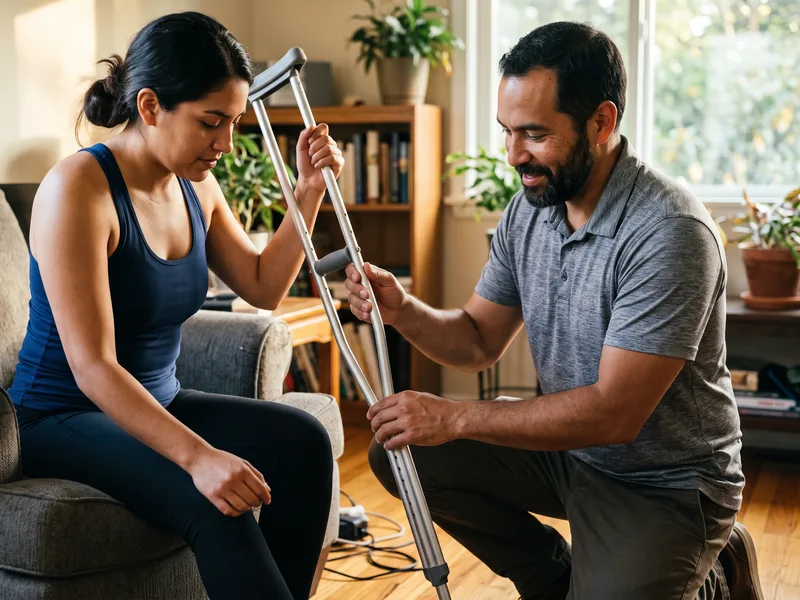
The Honest Truth
Nobody regrets starting too early. Every week, someone in our clinic says they regret waiting.
How We Fix It
Every plan has an endpoint. Here’s what the four phases look like after hip replacement.
Weeks 1–2
Pain
Gentle hands-on care and guided movement control swelling and pain while respecting your surgeon’s precautions, starting your very first visit.
Weeks 2–6
Prime
Targeted mobility work restores the hip motion you need for basic daily movement: walking, sitting, stairs.
Weeks 6–10
Perform
Progressive strengthening rebuilds the hip and leg muscles that surgery alone can’t restore.
Weeks 10+
Prevent
Balance, stairs, and real-world movement get tested under real load before you’re cleared to go all-in: that’s the endpoint, not just another appointment.
We treat the cause behind hip replacement recovery, not just the symptom, with a plan built around what you actually need.
Our approach · Hip replacement recovery
Before care: hip replacement recovery getting in the way of daily life
With a plan: steady progress, built around your actual goals
Questions, Answered
Most surgeons want you moving within days of a hip replacement, and many will refer you directly to PT before you’ve even left the hospital. If you’re not sure, a quick call to your surgeon’s office confirms any precautions, but Colorado allows direct access to physical therapy, so you don’t need a referral to start an evaluation with us. We coordinate with your surgical team from day one either way.
Yes, when it’s dosed correctly. Your new joint is built to be used, and appropriate movement is part of what makes the replacement successful long term. We work within your surgeon’s precautions and progress your exercises as your tissue heals, so you’re always working at the right level for where you are, not too little, not too much.
Most patients see steady, visible progress within the first 4–6 visits. A full plan runs through all four phases, Pain, Prime, Perform, and Prevent, typically over 10–12 weeks, depending on your surgery and starting point. Either way, you get a plan with an endpoint: you’ll always know which phase you’re in and what’s left, not an open-ended string of appointments.
Book Your Visit
Request a time and a real person calls you back, usually within two business hours. No phone tree. No ‘someone will reach out.’ Just a plan.
4.9 · 150+ Google reviews
Typical response: under 2 business hours
Step 1 of 5
That’s the hard part done. We’ll call during business hours to lock in your time. Most people are on the schedule same week.
Visit Us